PM Modi Norway Cartoon Controversy | UP News Network
Norway Cartoon Row Sparks Outrage in India, PM Modi Targeted by Norwegian Newspaper
New Delhi / Oslo | UP News Network International Desk
Tuesday, 19 May 2026
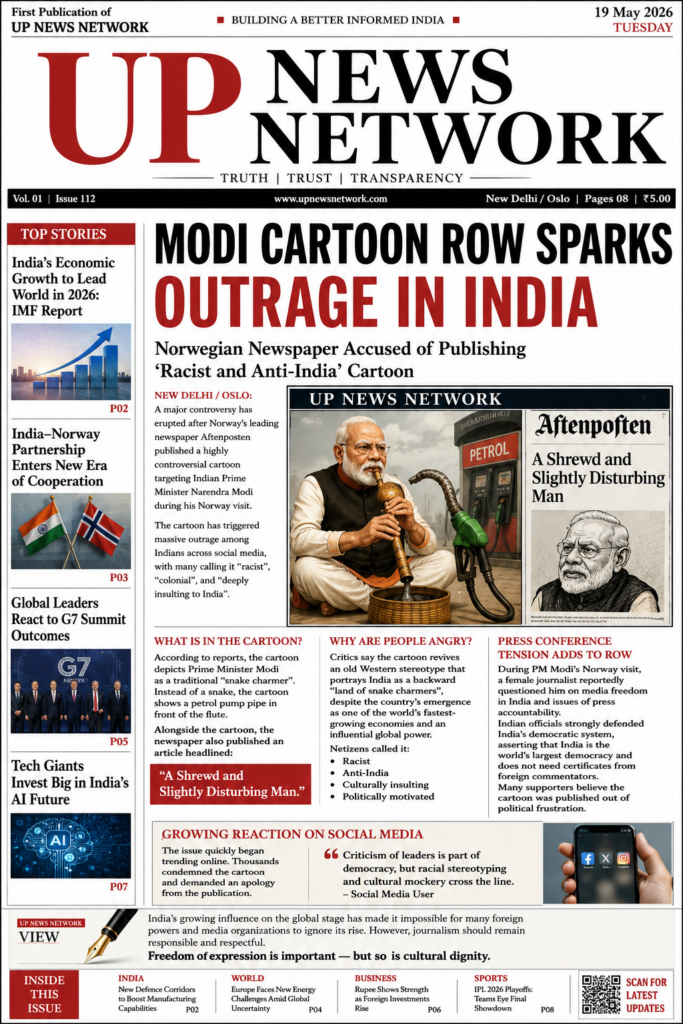
A major international controversy has erupted after Norway’s prominent newspaper Aftenposten published a controversial cartoon targeting Indian Prime Minister Narendra Modi during his Norway visit. The cartoon has triggered widespread anger among Indians worldwide, with many social media users calling it “racist”, “anti-India”, and “deeply offensive”.
According to reports, the newspaper portrayed Prime Minister Modi in the form of a traditional snake charmer while replacing the snake with a petrol pipe. Along with the cartoon, the publication also carried an article titled:
“A Shrewd and Slightly Disturbing Man.”
The publication quickly sparked outrage online, where thousands of users accused sections of Western media of continuing to promote outdated colonial stereotypes about India.
Why Did the Cartoon Trigger Massive Anger?
Critics argue that portraying India through “snake charmer” imagery reflects an old colonial mindset historically used by Western powers to mock Indian culture and society.
Many Indians questioned why certain foreign media organizations continue to target India despite the country becoming one of the world’s fastest-growing economies and an emerging global power.
Social media users described the cartoon as:
Racist
Insulting to Indian culture
Politically motivated
An attempt to undermine India’s global image
Several supporters of PM Modi also defended India’s democratic system and accused Western media outlets of bias against India’s growing international influence.
Press Conference Question Also Added Fuel to the Controversy
The issue gained further attention after a female journalist reportedly questioned PM Modi during a press interaction in Norway regarding media freedom and democratic practices in India.
Indian officials and supporters responded strongly, stating that India remains the world’s largest democracy and does not require validation from foreign commentators.
Following the exchange, many supporters believe the controversial cartoon was published as a reaction to India’s assertive diplomatic stance.
Strong Reaction Across Social Media
Soon after the cartoon surfaced online, reactions flooded social media platforms. Many users demanded an apology from the publication and called the depiction disrespectful toward India and its elected Prime Minister.
Others argued that while criticism and satire are part of journalism, racial or culturally insensitive portrayals cross ethical boundaries.
UP News Network View
India’s growing influence on the world stage has drawn increasing global attention. However, journalism and satire should avoid promoting stereotypes that hurt the dignity of any nation or culture.
Freedom of expression remains important in every democracy, but responsible reporting and cultural respect are equally essential in maintaining healthy international relations.